
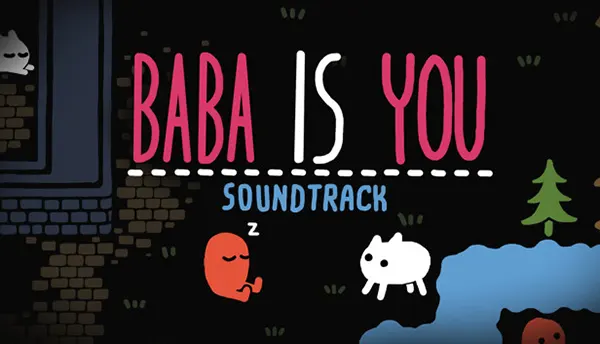
Baba Is You (Mobile): the puzzle game that rewrites the rules mid-level
Most puzzle games ask you to work within a fixed set of rules. Baba Is You does the opposite: it puts the rules inside the level as word tiles, then lets you push those words around until the whole system behaves differently. On a phone, that simple idea still feels unusually deep because every move can change what “you” are, what counts as “win”, and which objects even exist as obstacles. The mobile edition keeps the essence intact: short levels, instant feedback, and the kind of solutions that make you pause and say, “I didn’t know you could do that.”
Why the “rule tiles” mechanic changes how you think
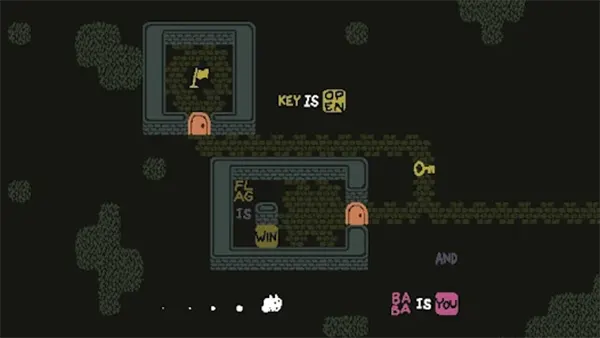
At its core, Baba Is You is a Sokoban-style block-pusher, but the blocks aren’t just crates. The most important blocks are words like BABA, WALL, IS, YOU, STOP, WIN, and PUSH. Arrange them into sentences and the sentence becomes a rule that the level obeys. If the rule says “WALL IS STOP”, walls block movement. If you manage to change it to “WALL IS PUSH”, walls become movable objects that you can shove around like boxes.
That switch is what makes the game special: you’re not only solving a maze, you’re editing the logic of the maze. Because the rules sit on the same grid as everything else, you can break them by accident, trap them behind objects, or deliberately tear them apart to disable a property. Sometimes the cleanest solution is not adding a new rule, but removing an old one so an obstacle becomes harmless.
Mobile play highlights another strength: the puzzles are compact. You’re rarely dealing with sprawling maps or long routes. The challenge comes from consequences. One step can flip a sentence, which flips behaviour, which flips the solution space. It’s a design that feels closer to debugging than to traditional “try every lever” puzzling, but without demanding any coding knowledge.
The basic grammar you need to read the level
Most levels teach a small “language” of sentences. Nouns are things in the level (BABA, ROCK, WALL, FLAG). Properties describe what those things do (YOU, WIN, STOP, PUSH). “IS” binds them together. Once you internalise that, you start scanning a level the way you’d scan a signpost: what is the win condition, what is the player character, and what is blocking movement?
Two habits help early on. First, keep at least one “YOU” rule stable whenever possible. If you accidentally break “BABA IS YOU” without an alternative, you can lose control entirely and need to undo. Second, separate “WIN” from “FLAG” in your mind. The goal is often the flag, but the game is perfectly happy if you turn something else into WIN and touch that instead.
Later, the game gets clever by introducing exceptions and layered logic. You might need to make yourself into a different object, or turn an obstacle into a tool, or reassign YOU to something that can slip through gaps. The puzzles don’t usually require fast reactions; they require noticing which word tiles can be moved safely, and which ones are locked behind the very rules you need to change.
How the mobile version plays in 2026: controls, saves, and comfort
The phone edition works because the interaction is still direct: tap-to-move or directional input, quick undo, and a clear grid where every change is visible. The screen is smaller than a PC monitor, so good habits matter more: zooming your attention across the whole room before acting, and checking whether a word you need is actually reachable without breaking the sentence that keeps you alive.
One of the biggest quality-of-life concerns on mobile has always been continuity: people play in short sessions, across devices. In early January 2026, the Android release notes explicitly mention improved cloud sync support and a manual restore option from backups or the cloud, accessible from a cloud icon in Settings. That’s the kind of practical update that fits how mobile games are actually used: a commute level here, a late-night attempt there, with progress staying consistent.
It also matters what the app does not do. The mobile store listings emphasise a premium, paid puzzle game model rather than an ad-driven one, and the privacy sections indicate no data collected. For players, that translates into fewer interruptions and less “account management” friction. You buy it, you play it, you spend your brainpower on the puzzles instead of on pop-ups.
Mobile-friendly solving habits for the hard stuff
When a level feels impossible, start by making a “state check” rather than pushing immediately. What rules are active right now? Which ones are fragile (a sentence that can be broken by one shove), and which ones are redundant (a rule you can delete without dying)? On a phone, this quick scan prevents the most common mistake: doing five moves, then realising you destroyed the only path to the words you needed.
Use undo as a thinking tool, not a panic button. A good approach is to test a hypothesis in two or three moves, then undo back to the moment before the rules changed and try a different ordering. Because the game’s behaviour updates instantly, you can treat each attempt like a tiny experiment: “If I make WALL PUSH first, can I free IS? If not, what can become YOU instead?”
Finally, learn to recognise “reframing” puzzles. Some levels are designed to lure you into chasing FLAG, when the more elegant answer is to move WIN onto something you can reach, or to turn yourself into an object already standing beside the target. Once that pattern clicks, mobile sessions become satisfying again because you stop grinding and start spotting the intended twist.
Content depth and longevity: why it still holds up years later
Baba Is You launched on PC and Switch in 2019 and came to iOS and Android on 22 June 2021. That matters in 2026 because it explains the game’s reputation: it’s not a brief novelty, it’s a fully built puzzle game that has had years to prove itself. The levels ramp from approachable to genuinely demanding, and the difficulty is part of the identity, not an accident.
Mobile builds have also grown. The iOS version history lists substantial free content updates, including “New Adventures” (over 150 new levels) and “Museum” (unused or cut levels, some with developer commentary), dated August 2022. That kind of expansion is more than extra stages; it shows the game has a long tail, with room for both fresh challenges and a peek behind the design process.
Meanwhile, the broader Baba Is You ecosystem includes a level editor and online sharing that arrived as a free update on other systems in late 2021. Even if you mainly play on mobile, that community aspect affects the game’s longevity: strategies circulate, puzzle “grammar” becomes shared knowledge, and the game stays in conversation. For players, it means you’re not alone when a level melts your brain.
What Baba Is You teaches modern mobile design
In 2026, mobile puzzle games are often split between bite-sized, daily-challenge formats and sprawling, narrative-driven experiences. Baba Is You sits in a rare middle ground: each level is small and session-friendly, but the idea space is huge. That balance is why it remains a reference point for designers and a reliable recommendation for players who want something meaty without a time commitment.
It also demonstrates restraint. The visuals are clean and readable, the soundtrack stays out of your way, and the drama comes from the rules changing, not from cutscenes. On a phone, where distractions are constant, that clarity is a real advantage. You can return after a few days and still reorient yourself by reading the sentences on the grid.
Most importantly, it respects the player. The game doesn’t pretend the puzzles are easy, and it doesn’t sell shortcuts. It gives you transparent systems, fast iteration through undo, and the satisfaction of a solution that feels earned. If you want one mobile game that can still challenge you months after installing it, Baba Is You remains a safe bet in 2026.