
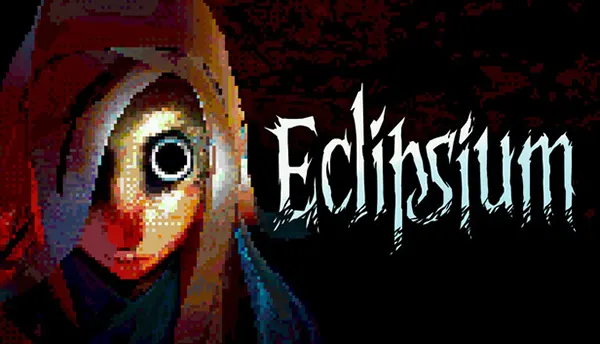
Eclipsium: A Surreal Horror-Walkthrough Where the Body Becomes the Price of Progress
Eclipsium stands apart from the usual horror formula by rejecting predictable jump scares and stock survival mechanics. Instead, it builds tension through a disturbing yet conceptually coherent idea: advancement requires sacrifice, and that sacrifice is literal. As players move forward, they gradually lose parts of their character’s body, transforming both gameplay and perception. The result is not simply fear, but a sustained psychological unease that lingers well beyond a single session. In 2026, when horror titles increasingly rely on cinematic spectacle, Eclipsium offers something far more intimate and unsettling.
A Design Philosophy Built on Loss and Limitation
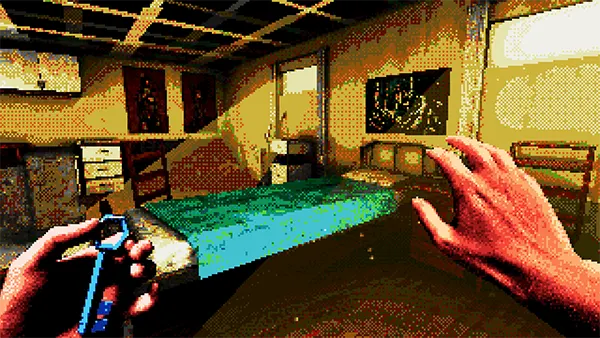
At its core, Eclipsium is structured as a first-person horror-walkthrough with environmental interaction and light puzzle elements. However, progression is inseparable from physical diminishment. Early in the game, movement feels stable and responsive. As sacrifices accumulate, locomotion changes: losing a leg alters balance and speed, losing an arm restricts interaction, and losing sight transforms navigation into a distorted sensory experience. These mechanics are not cosmetic; they reshape the player’s relationship with space.
This approach creates tension without relying on aggressive enemy AI or timed chase sequences. The fear comes from anticipation and vulnerability. When players understand that every puzzle solved or threshold crossed may demand another piece of their body, decision-making becomes existential rather than tactical. The game design cleverly reframes progress as a moral and psychological burden.
Technically, Eclipsium leverages adaptive control remapping and procedural animation blending to reflect each stage of bodily loss. Rather than scripted cutscenes, the transformation occurs in real time. This continuity preserves immersion and reinforces the idea that the character’s deterioration is systemic, not decorative. In a genre saturated with formula, this mechanical coherence feels deliberate and rare.
Atmosphere Beyond Jump Scares
Eclipsium avoids cheap startle tactics. There are no abrupt audio spikes designed purely to provoke reflex reactions. Instead, the soundscape evolves as the character’s physical state changes. With partial hearing loss, directional cues become unreliable. With impaired vision, ambient noise grows dominant, disorienting the player in subtle but persistent ways.
Visually, the game employs surreal environmental shifts rather than grotesque spectacle. Corridors elongate, architecture folds inward, and familiar spaces distort as perception degrades. These changes are not random. They correlate with the protagonist’s physical fragmentation, suggesting that the world itself mirrors bodily and psychological collapse.
The pacing reinforces this design. Long stretches of quiet exploration allow anxiety to accumulate organically. When something finally shifts—an object moved, a corridor sealed, a shadow misplaced—the impact feels earned. By focusing on sustained dread rather than momentary shock, Eclipsium aligns more closely with psychological horror traditions than mainstream survival titles.
Narrative Structure and Symbolism in 2026 Horror Design
Thematically, Eclipsium draws on body horror but reframes it through introspection rather than spectacle. The narrative unfolds through fragmented memories, environmental storytelling, and cryptic monologues triggered at specific thresholds of physical loss. The player gradually realises that the sacrifices may represent suppressed trauma rather than arbitrary cruelty.
Unlike many horror games that rely heavily on exposition, Eclipsium trusts implication. Text fragments, architectural motifs, and recurring symbols hint at a broader context without spelling it out. This restraint invites interpretation and encourages replayability. Multiple endings, influenced by the order and manner of sacrifices, deepen that ambiguity.
From a 2026 industry perspective, this reflects a broader shift toward experiential storytelling. Independent and mid-budget studios increasingly favour conceptual cohesion over blockbuster scale. Eclipsium fits within this movement, offering a tightly focused experience that prioritises emotional continuity over graphical excess.
Embodiment as a Gameplay Mechanic
What makes Eclipsium particularly noteworthy is its integration of embodiment into mechanical design. When players lose mobility, they must physically adjust their control habits. Camera sway increases, reach shortens, and interaction prompts shift position. The discomfort is deliberate, pushing players to confront limitation rather than bypass it.
This design echoes academic discussions in game studies about agency and constraint. By reducing capability instead of expanding it, Eclipsium inverts traditional progression systems. The more the player advances narratively, the less empowered they become mechanically. The tension between story progress and functional regression forms the emotional backbone of the experience.
Importantly, the game avoids gratuitous depiction of violence. The loss is stylised, almost abstract. Limbs dissolve into shadow or fragment into geometric distortions rather than explicit gore. This restraint keeps the focus on atmosphere and meaning rather than shock value, reinforcing its surreal identity.
Technical Execution and Player Reception
Built on a contemporary engine supporting dynamic lighting and real-time deformation, Eclipsium achieves its surreal aesthetic through layered visual filters and volumetric fog systems. As the protagonist deteriorates, colour saturation shifts and depth perception narrows. These changes are implemented gradually to avoid abrupt immersion breaks.
Accessibility options are thoughtfully included, even within the restrictive design philosophy. Players can adjust visual contrast, remap controls after limb loss, and enable sensory indicators if hearing or sight mechanics become overwhelming. This balance between artistic intent and player comfort demonstrates maturity in modern horror development.
Critical reception in 2026 highlights the game’s consistency. Reviewers frequently note that Eclipsium feels complete rather than experimental for its own sake. Its runtime—approximately six to eight hours—avoids filler while allowing sufficient narrative development. The absence of combat mechanics further distinguishes it from action-oriented horror hybrids.
Why Eclipsium Redefines the Horror-Walkthrough Format
Eclipsium challenges the assumption that horror must escalate through louder threats or stronger enemies. Instead, it escalates through subtraction. By turning the body into currency, it forces players to reconsider what progress means. The tension is not about survival in the conventional sense, but about identity and fragmentation.
This redefinition aligns with evolving player expectations. In 2026, audiences increasingly value coherence and thematic depth over repetitive mechanics. Eclipsium delivers a focused concept executed with discipline. Its horror emerges from inevitability rather than surprise.
Ultimately, the game leaves players reflecting not on a monster encountered, but on what was surrendered along the way. That lingering introspection marks it as more than a conventional horror title. It stands as an example of how the walkthrough format can evolve when developers treat mechanics, narrative, and atmosphere as inseparable parts of a single vision.