
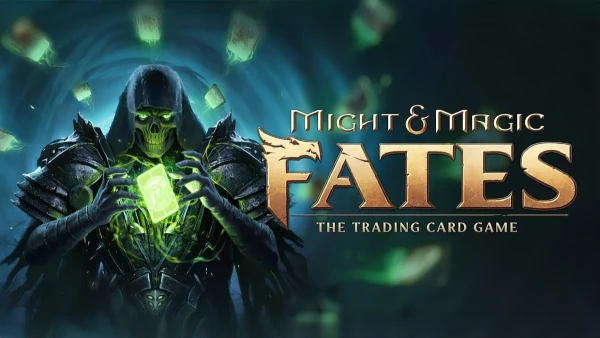
Might & Magic Fates TCG in 2026: Factions, Deck Building and Battle Tactics
Might & Magic Fates TCG brings Ubisoft’s fantasy universe into competitive card battles where deck composition, battlefield positioning and careful resource management determine the outcome. Released worldwide on mobile devices on 4 February 2026 and subsequently made available through Steam Early Access, the free-to-play game combines familiar creatures and heroes with a distinctive tactical system. Players can mix cards from different factions, develop their heroes during matches and build strategies around creatures, spells, buildings and artefacts. With six factions represented by November 2026 and an expanding card collection, understanding how these elements work together is essential for constructing reliable decks and winning competitive duels.
Factions in Might & Magic Fates TCG and Their Fighting Styles
Might & Magic Fates originally featured four principal factions: Haven, Necropolis, Inferno and Academy. Stronghold and Sylvan subsequently joined the game during 2026, expanding the available tactical possibilities. Each faction draws on the established identity of the Might & Magic universe, although its cards are adapted to the new combat system. Haven emphasises organised armies and cooperation between units, Necropolis centres on undead creatures and persistent threats, Inferno encourages aggressive combinations, while Academy provides magical tools and flexible responses. Stronghold introduces powerful creatures and direct pressure, whereas Sylvan adds woodland units and mechanics involving stealth and positioning.
One of the game’s defining features is that factions do not impose strict deck-building restrictions. Players can combine creatures, spells, buildings and artefacts from different factions rather than selecting only cards associated with their chosen hero. This allows strategies that would be impossible in traditional faction-locked card games. An aggressive Inferno core might include defensive cards from Haven, while an Academy-oriented deck could use Necropolis creatures to maintain pressure during longer battles. However, combining several factions does not automatically produce a stronger deck. The important question is whether the selected cards support a common plan and remain useful when drawn in different combinations.
The six factions also encourage different approaches to battlefield control. Haven units can form the basis of coordinated attacks, particularly when their abilities reward the presence or positioning of friendly characters. Necropolis offers opportunities to build around undead threats and interactions between cards, while Inferno supports strategies that aim to damage opponents before they establish a stable defence. Academy is particularly suitable for players who prefer manipulating difficult situations through spells and specialised effects. Stronghold’s heavier creatures can demand immediate answers, and Sylvan’s Stealth mechanic creates additional problems for opponents relying on straightforward attacks. These are strategic tendencies rather than rigid rules, since individual cards and balance updates can change how each faction performs.
Choosing Faction Combinations for Different Strategies
A practical starting point is to choose a primary faction according to the type of battle you want to play. For an aggressive deck, Inferno provides a natural foundation because its card pool contains tools designed to sustain offensive pressure. Stronghold creatures can complement that approach by offering substantial attack power, although expensive units may leave the deck with fewer early options. A more defensive construction could begin with Haven and include Academy spells that help manage opposing threats. The objective is not to use as many factions as possible, but to identify a small collection of abilities that reinforce one another throughout the match.
Necropolis combinations are worth considering when building a strategy that can recover from losing creatures or maintain pressure across several exchanges. Rather than relying exclusively on a single powerful unit, such a deck benefits from having multiple ways to remain competitive after the opponent removes an important threat. Academy cards may provide useful supporting effects, while durable Haven characters can help preserve the battlefield long enough for slower combinations to become effective. When evaluating these mixtures, pay attention to the actual wording of each card. An effect that supports undead creatures, for example, may be less valuable in a deck containing mostly units from other factions.
Sylvan and Stronghold broaden these choices further. Sylvan’s introduction in September 2026 brought more than 40 cards and the Stealth mechanic, creating opportunities to build around protected threats and carefully timed attacks. Stronghold can supply considerable physical pressure, but its strongest creatures still require support and sensible resource management. Players experimenting with these newer factions should test their combinations against several opposing strategies instead of judging them after one successful duel. The same principle applies when choosing a hero: the best selection is the one whose abilities complement the deck’s intended rhythm, not necessarily the hero associated with its most numerous faction.
How to Build an Effective Combat Deck in 2026
Deck construction in Might & Magic Fates begins with a clear win condition. Some decks attempt to establish early pressure and finish matches before expensive enemy cards become influential. Others seek to control the battlefield, preserve their hero and gradually develop an advantage through stronger creatures or repeated card interactions. A third approach relies on combining particular abilities to produce an especially effective sequence of moves. Before adding cards, decide which of these plans your collection can support. Including several unrelated strategies usually makes a deck less dependable, because its cards may demand different resources, battlefield positions or timing.
The game’s economy differs from the conventional mana systems found in many collectible card games. Gold is connected to the cards in a player’s hand and the decisions made during each turn, rather than following a simple automatic increase in available mana. This means that resource planning begins with the cards themselves. A powerful creature is not always the correct play if using it prevents you from responding to an immediate threat or developing another useful position. The absence of a traditional mana ramp also makes the opening turns important: meaningful actions can occur early, and poor resource decisions can create disadvantages that become difficult to reverse.
A dependable deck needs a balance between cards that establish an early presence, those that answer enemy threats and those that help close the match. Creatures provide much of the direct fighting power, spells offer immediate effects, buildings contribute additional tactical functions, and artefacts can strengthen the capabilities of characters. Heroes are particularly important because they progress during individual matches and unlock stronger abilities. When selecting support cards, consider how frequently they will influence a real battle. An inexpensive spell that reliably protects an important creature may prove more useful than a spectacular effect that rarely arrives at the right moment.
Card Synergies, Gold Management and Deck Testing
Strong card combinations are built around effects that work together without requiring an unrealistic sequence of draws. For example, a creature capable of benefiting from allied positioning becomes more useful when supported by cards that help establish or protect neighbouring characters. A hero equipped with a suitable artefact may become an important offensive threat, while spells can remove defenders or interfere with an opponent’s planned attack. Combining damage effects with creatures that maintain pressure is another practical approach. However, a successful combination must account for its total gold cost, the space available on the battlefield and whether its individual components remain useful when drawn separately.
Specific card interactions also change as the developers adjust balance. The October 2026 update modified several notable options: Behemoth’s attack and health were reduced from 8/8 to 7/7, Fiery Weapon became restricted to targeting creatures, and Crusader Sergeant increased from four to five gold. The same update reduced the cost of Cyclops Brawler from five to four gold and improved several less frequently used cards. These adjustments demonstrate why copying an old deck without reviewing its components can be misleading. A combination that previously provided exceptional value may become less efficient, while a cheaper supporting card can make an overlooked strategy practical.
Testing should focus on consistency rather than isolated victories. Play a series of matches and examine whether the deck regularly establishes useful early positions, has affordable answers to enemy threats and can recover after losing its strongest creature. If important cards repeatedly remain unusable because of their costs, replace some with cheaper alternatives. If the deck survives but struggles to finish battles, strengthen its offensive options or improve the connection between its main combinations. November 2026 also brought a significant change to deck construction: Season 6 ended card rotation and returned more than 50 previously rotated cards to competitive play. This considerably expanded the available combinations, making systematic testing more important than relying on outdated deck lists.

Battle Tactics, Hero Progression and Competitive Play
Combat in Might & Magic Fates uses a single-lane battlefield where the placement of heroes, creatures and buildings influences how engagements develop. Unlike card games in which units simply attack independently, the arrangement of characters can determine which targets are available and how particular abilities operate. Positioning becomes especially important when using effects involving flanking, ranged attacks or support from nearby characters. A strong unit placed without considering the rest of the battlefield may offer less value than a weaker creature positioned to protect an ally or improve the next attack. Players therefore need to assess the entire formation before committing their resources.
Hero progression adds another layer of decision-making. Heroes develop during a match and gain access to abilities that can significantly change the direction of combat. This creates a choice between pursuing immediate damage and preparing for stronger turns later. A player who spends every resource on aggressive creatures may struggle to respond when an opponent’s hero becomes more influential. Conversely, concentrating exclusively on future abilities can allow an aggressive opponent to establish an overwhelming advantage. The most effective approach depends on the current board, available cards and the opponent’s likely next actions. Hero development should support an existing strategy rather than become an isolated objective.
Competitive matches reward the ability to recognise when the original plan needs to change. Against aggressive decks, surviving the opening exchanges may be more valuable than protecting a late-game combination. Against defensive opponents, committing every creature at once can expose the entire strategy to removal effects or favourable counterattacks. Gold management and initiative are particularly important because they determine which actions remain available during critical exchanges. A player who anticipates the opponent’s strongest response can often achieve more by holding a card for another turn than by spending resources immediately. Effective tactical play depends on understanding both what is currently possible and what the opponent is preparing to do next.
Practical Tactics for Winning More Card Duels
Opening decisions should prioritise establishing a functional position without exhausting the hand unnecessarily. Identify which cards can contribute immediately and which are more valuable after the battlefield develops. If your opponent begins aggressively, consider defensive positioning or inexpensive removal before investing in a large creature. When holding cards that benefit from particular arrangements, avoid filling the available spaces with units that prevent those combinations from working. Each action should contribute towards controlling the battlefield, strengthening your hero or creating a realistic path to victory. Playing a card simply because sufficient gold is available is rarely a sound reason on its own.
During the middle stages of a duel, assess the value of every exchange. Removing an enemy creature may be worthwhile even without dealing direct hero damage if that creature enables a dangerous combination or protects an important position. The October 2026 changes to Stun illustrate why knowing current mechanics matters: the effect now ends when the affected entity takes damage, rather than necessarily lasting throughout the round. Players who understand this interaction can avoid wasting attacks or spells. Similarly, Stealth, Flying and Flanking require attention to the precise targeting and positioning rules of the cards involved. Reading these effects carefully is more dependable than assuming they operate identically to abilities in other card games.
Improvement in ranked play comes from analysing repeated mistakes and adapting to changes in the available card pool. Keep track of the opponents and strategies that consistently cause difficulties, then introduce answers that fit the deck without weakening its central purpose. A single specialised counter may help against a troublesome combination, but filling the deck with cards that are ineffective elsewhere will reduce overall consistency. By November 2026, the game had added new heroes, including Inferno’s Jezebeth in the Hellbound update, alongside additional cards and balance adjustments. These developments make flexibility essential. Successful players continue refining their faction combinations, resource decisions and battlefield tactics rather than treating any deck as permanently complete.