
Assassin’s Creed Jade — What the Series Keeps and What It Loses on Mobile
Assassin’s Creed Jade is Ubisoft’s attempt to bring a full-scale Assassin’s Creed experience to phones, set in ancient China during the Qin era. It’s ambitious on paper: an open world, stealth, parkour, combat, and a story built around the birth of an empire. But mobile hardware, touch controls, and a free-to-play business model inevitably reshape what “Assassin’s Creed” feels like in your hands. In 2025, the most interesting question isn’t whether Jade looks like Assassin’s Creed — it does — but how much of the series’ identity survives the compromises.
What Jade Preserves: The Core Assassin’s Creed Fantasy
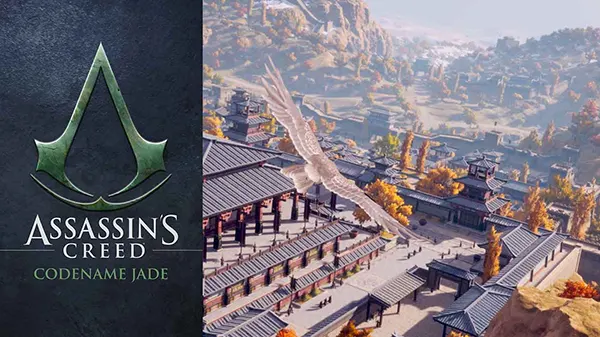
The strongest thing Jade keeps is the basic fantasy of being an Assassin moving through a dense historical setting. Ubisoft confirmed the game is set in China’s first unified empire, with the world designed around vertical movement and the familiar rhythm of climbing, spotting routes, and moving with purpose through guarded spaces. Even in short gameplay clips and early beta impressions, the structure is recognisable: reach a vantage point, mark targets, pick an approach, and disappear again.
Parkour remains central, and that matters because traversal is one of the series’ most defining traits. Jade leans into quick, readable routes — rooftops, walls, beams, and pagodas — that suit shorter play sessions but still reward good navigation. It’s not just movement for movement’s sake either; it’s used to create that “I can go anywhere” illusion, which is exactly what classic Assassin’s Creed has always been good at when its cities are designed well.
Stealth also stays close to tradition. You still get the tension of slipping past patrols, using cover, and isolating targets. The hidden blade is present, and assassinations are still framed as decisive moments rather than just another damage number. When Jade works, it taps into the same quiet satisfaction as the main games: you planned, you infiltrated, and you left without turning the whole area into chaos.
Setting and Atmosphere: Qin China as More Than a Backdrop
Choosing Qin-era China is a smart move because the period naturally fits the series’ themes: centralised power, surveillance, rebellion, and the reshaping of identity under a new state. Ubisoft’s official descriptions point to an age of trade and cultural exchange as the empire expands, which gives the narrative plenty of room for political tension. That’s fertile ground for Assassin’s Creed storytelling — especially when the player is caught between ordinary people and the machinery of authority.
Jade also keeps the franchise’s habit of mixing famous landmarks with everyday street-level life. Even if the phone hardware means some simplification in crowd density and distant detail, the goal is clear: make players feel like they’re walking through a living place, not a museum. If the final release maintains strong environmental variety — city districts, rural edges, ceremonial spaces — the setting could end up being one of the game’s main strengths.
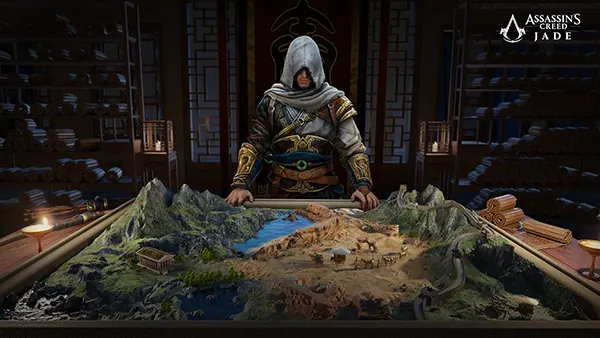
Another major carry-over is character identity as a story tool. Jade is built around a customisable protagonist, which is a big change for the series, but it still serves a classic Assassin’s Creed function: you’re an outsider shaped by the era. Rather than relying on a single iconic hero, Jade seems to frame the Assassin role as something you grow into, which fits a mobile RPG structure while still keeping the “becoming an Assassin” arc intact.
What Jade Changes: Mobile Design Realities and Their Side Effects
The biggest difference is control. Touch screens can handle movement and camera control, but they rarely deliver the same precision as a controller, especially in parkour-heavy games. That usually pushes design towards assistance systems — stronger auto-climb, generous ledge grabs, and simplified navigation — which can make movement feel less earned. Assassin’s Creed has always walked a line between cinematic flow and player mastery, and mobile tends to tip that balance towards automation.
Combat is also likely to be streamlined. Phone action games often lean on readable enemy patterns, fewer simultaneous threats, and abilities with clear cooldowns. That doesn’t mean combat becomes bad, but it changes the feel: less messy improvisation, more “use the right tool at the right time”. When you combine that with RPG progression, the risk is that skill becomes secondary to stats, which can weaken the series’ classic assassin fantasy if not handled carefully.
Then there’s pacing. A console Assassin’s Creed expects long sessions, slow exploration, and gradual discovery. A mobile game is built for fragmented time: ten minutes on a commute, five minutes in a queue. Jade’s mission structure is therefore likely to be more modular, with clearer short-term rewards. That can improve accessibility, but it can also reduce the sense of immersion if the world feels like a menu of tasks rather than a place you inhabit.
The Free-to-Play Question: Progression, Monetisation, and Trust
By 2025, Jade is widely reported to have shifted from an earlier 2024 target into a later window, with major sources linking the delay to changing priorities on the publisher side. Delays alone aren’t a problem — they can improve quality — but they do add pressure. Mobile audiences expect frequent updates, polished performance across devices, and fair progression. If the game arrives rough or overly aggressive in its economy, it will struggle to keep long-term trust.
The business model is the part that can most strongly reshape the series’ identity. Assassin’s Creed traditionally sells you a complete game, then optionally sells expansions. A free-to-play structure often relies on friction: slower progression unless you spend, currencies layered on top of each other, and timed events designed to keep you checking in. Jade can still be respectful, but the risk is obvious: if assassinations and exploration start feeling like chores built around retention mechanics, the magic fades fast.
Multiplayer and live features have been mentioned in official communications and event updates, which suggests Jade may lean into social systems over time. That can be positive if it stays optional — co-op missions, friendly competitions, shared challenges — but it can also pull focus away from the solitary stealth fantasy that defined the series for years. The best version of Jade is one where live content supports the world rather than replacing the heart of the experience with constant grinding.
Where Jade Fits in the Series: A Mobile Entry With Real Stakes
Jade isn’t just “Assassin’s Creed on a phone”; it’s a test of whether the brand can hold its meaning outside premium releases. Ubisoft has described it as an open-world experience made specifically for iOS and Android, which signals that this isn’t intended to be a lightweight spin-off. If Jade lands well, it could become a gateway game — the first Assassin’s Creed for people who don’t own a console, or who want the world in shorter bursts.
But the stakes run both ways. A game can look like Assassin’s Creed and still feel wrong if its systems reward the wrong behaviours. The series has always been at its best when it rewards curiosity, patience, and clever stealth. If Jade rewards logging in, chasing currencies, and repeating tasks for upgrades, it may still be successful as a mobile title, but it will feel like it’s wearing Assassin’s Creed as a costume rather than carrying its spirit.
In 2025, the most honest way to frame Jade is as a compromise with potential. It will almost certainly deliver an atmospheric historical world, recognisable traversal, and familiar stealth beats. The question is whether it can keep those strengths without turning progression into a treadmill. If it gets that balance right, Jade could preserve more of Assassin’s Creed than most people expect from a phone game.
What Players Should Watch For in 2025
First, pay attention to how the game handles movement. If parkour feels overly automated, the world may look impressive but play flat. A good sign would be systems that let skilled players move faster and more cleanly, while still helping newcomers avoid frustration. Assassin’s Creed doesn’t need perfect simulation, but it does need the feeling that you’re driving the character rather than watching them.
Second, watch the economy and progression speed. A fair mobile game lets you build competence through play, not through spending. If upgrades are meaningful but not mandatory, and if stealth remains viable without chasing the highest numbers, Jade can remain true to the assassin fantasy. If progression becomes a hard gate, the game will push players into repetitive loops that eventually exhaust even loyal fans.
Finally, look at content cadence and stability across devices. Mobile launches live or die on performance, battery drain, and update discipline. A huge open world is great, but not if it stutters on mid-range phones or demands constant downloads. If Jade arrives technically strong and keeps its monetisation reasonable, it has a real chance to become a proper Assassin’s Creed entry — not a curiosity, and not a diluted side project.