

Mobile Legends: Bang Bang — Macro Role Guide (2026): How to Stop Losing the Map
Macro in Mobile Legends is the part of the game that decides matches even when mechanics are similar: who gets the first move, who controls vision, who turns a small timing into a tower, and who avoids bad fights. In 2026, the roles are still the same on paper, but the way they win games is very specific: objective timings, wave control, and rotating with purpose instead of “walking around”. This guide breaks macro down by role, with practical habits you can repeat every ranked game.
Roam + Mid: early map control, vision, and first rotations
Your first macro job as Roam and Mid is to create information and tempo. That means you’re not just “helping lanes” — you’re deciding where your team is allowed to play. If your Roamer keeps rivers and key bushes safe, your Mid can clear and move first. If Mid is late to waves, Roam ends up face-checking alone and the whole map collapses into defensive play.
In the early minutes, treat Mid wave clear as a timer for every decision. Clear fast, then move as a pair: either you pressure the side near the first objective, or you punish the enemy Gold lane if their marksman is greedy. Even if you don’t get a kill, forcing battle spells, chunking HP, or pushing someone off a wave creates a “numbers advantage” for the next 20–30 seconds.
Macro also means knowing when not to fight. If your Jungler is on the opposite side finishing a clear, Roam and Mid should avoid committing into a full skirmish. Instead, show presence to protect your side laner, deny enemy vision, and make the enemy waste time. Time wasted is gold denied.
Roam + Mid checklist: what to do before Turtle and how to avoid pointless deaths
The first Turtle appears at 2:00 and the first one spawns next to the EXP lane side. Your job is to make that area playable before it happens. Around 1:20–1:40, start thinking about river access: sweep bushes, check the nearest entrances, and keep your Mid wave in a state where Mid can move without losing too much gold.
When you’re behind, don’t “flip” the objective by walking into fog. Instead, trade. If contesting Turtle is impossible, Mid should instantly shove and Roam should help protect a side wave or threaten a quick tower plate. You’re trying to exit the early game without donating extra kills — not trying to look brave in a 3v5.
One clean habit changes everything: after every rotation, ask “what did we gain?” If the answer is “nothing”, fix it next time by tying movements to a wave or an objective. Rotations should either secure vision, protect a risky wave, force spells, or convert pressure into turret damage.
Jungle: objective sequencing, tempo farming, and clean decisions
The Jungler is the role that turns time into guaranteed value. Your macro isn’t only about ganks; it’s about sequencing: clear efficiently, appear on the map at the right moment, and make the enemy guess wrong. A gank that costs two jungle camps and arrives late to Turtle is often a net loss, even if it looks flashy.
Play around objective windows. Turtle spawns at 2:00 and repeats in intervals, but it stops being available after the early window ends, so the early game is a race for controlled advantages. If you arrive late with low HP and no Retribution advantage, you’re not “contesting” — you’re donating. Good Junglers know when to start the objective, when to bait it, and when to force a fight away from it.
Decision quality matters more than mechanical outplays. If your Gold laner is your win condition, your macro should protect their lane state and prevent dives. If your EXP hero is strong early, you can play for early river dominance and choke the enemy jungle. You don’t need the same plan every match — you need the correct plan for your draft.
Objective control in 2026: how to set up Turtle and transition into Lord
Before starting Turtle, you need three things: wave states, vision, and positioning. Wave states mean Mid and the nearby side lane aren’t losing a full wave under tower while you hit the objective. Vision means your Roamer has checked the dangerous angles so you aren’t surprised by a collapse. Positioning means your damage dealers can hit safely while your frontline blocks entrances.
Lord timing depends on what happens with Turtle. If the last Turtle is taken, the first Lord appears 2 minutes after that. If Turtle isn’t taken around the later early-game window, it can be replaced by Lord after a short period without taking damage. The macro point is simple: stop treating “minute 8” like a magic number and start tracking the actual last Turtle time. That’s how you arrive first and force the enemy into a rushed contest.
At 12 minutes, Lord becomes Enhanced Lord, which changes macro priorities. Teams that understand this stop taking coin-flip fights right before 12:00 and instead set up lanes, reset for items, and aim for a clean Enhanced Lord take that converts into inhibitor pressure. If you’re going to fight, fight on your terms — not because someone wandered into the pit.
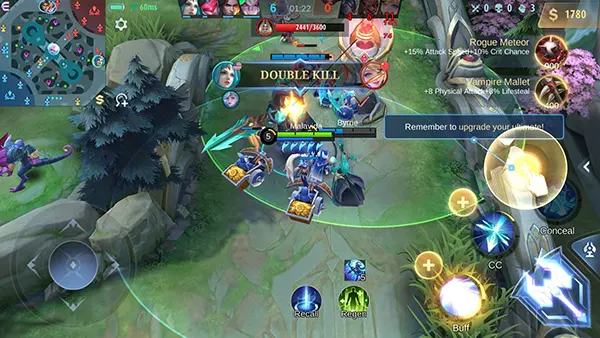
Gold + EXP lanes: wave control, safe side vs strong side, and mid-game conversions
Side lanes decide whether your team is allowed to take objectives without bleeding towers. Gold lane is usually your scaling damage, so their macro is about safe farming with minimal deaths and turning item spikes into tower damage. EXP lane is usually your flexible macro engine: they can hold pressure, rotate first in some matchups, and become the frontline that makes objective setups safe.
Wave control is the most underrated macro skill in ranked. If you push at the wrong time, you give the enemy an easy freeze near their turret and you’re forced to overextend. If you never push, you lose tower plates and you’re stuck reacting. The goal is to time your push so you can rotate without losing a full wave — and so the enemy has to answer the wave while you’re taking vision or starting an objective.
Learn the idea of strong side vs safe side. Strong side is where your team’s attention and vision are; safe side is where you can farm without inviting a collapse. If you are the Gold laner and your Roamer is on the other side, your macro is to farm safely, keep the wave manageable, and avoid ego trades. If you are the EXP laner and your team is playing around you, you can pressure harder and force responses.
Mid-game plan: turning one pick into towers, not into a messy chase
After a kill, don’t sprint across the map looking for more. The clean conversion is: shove the nearest wave, take a turret, take enemy jungle camps on the way out, then reset. This pattern is boring, and it wins games. Chasing often turns a won fight into staggered deaths and throws away the advantage you just earned.
When Lord is on the table, side lanes must prepare the map. That means you push waves before your team commits to the pit, so the enemy has to show on lanes or give up turrets. If you start Lord with both side waves pushing into you, you’re inviting a collapse because the enemy can move first while your waves die under your towers.
The simplest rule for late macro: don’t split your damage. If you’re playing Gold lane, stay alive and hit what is in front of you during objectives. If you’re EXP lane, protect space, block flanks, and be willing to disengage so your team doesn’t lose a fight to one bad angle. Good macro is often just refusing to make the one mistake the enemy is waiting for.