
Silent Hill: Townfall: How the Scottish Setting Changes the Psychological Horror Formula
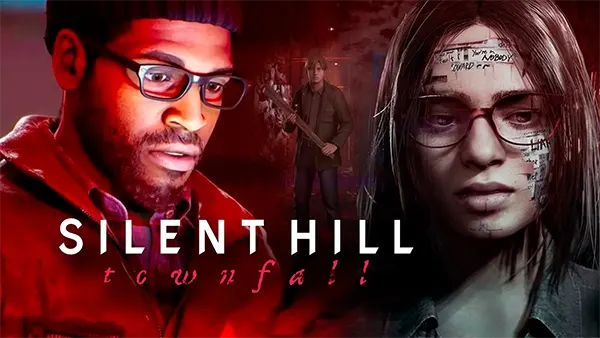
Silent Hill: Townfall takes one of gaming’s most recognisable psychological horror ideas and moves it somewhere that feels both unfamiliar to the series and unusually well suited to it. Developed by Glasgow-based Screen Burn Interactive, formerly known as No Code, the game is set in Scotland in 1996 and centres on the isolated island community of St. Amelia. Simon Ordell arrives there with only a fractured understanding of why he has been called back and what connection he has to the town. As of August 2026, the game is scheduled for release on 24 September 2026, so its complete story remains deliberately protected. Yet the material already shown makes one change particularly important: Scotland is not simply replacing one backdrop with another. Its coastline, weather, architecture, social history and sense of geographical separation are being used to shape how fear works. Combined with first-person exploration, analogue technology and a stronger emphasis on avoiding danger, Townfall presents psychological horror as something rooted in a convincing place rather than a collection of familiar horror symbols.
Scotland Becomes Part of Silent Hill’s Psychological Horror
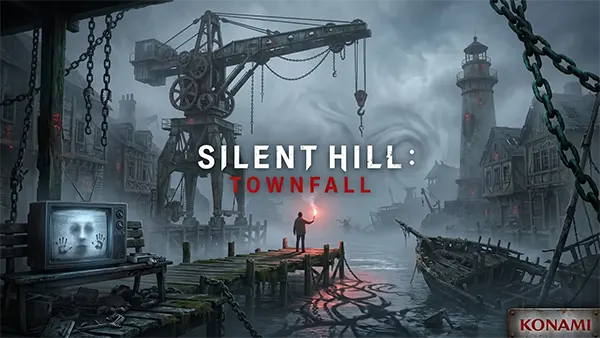
The choice of Scotland has a direct connection to the people making Townfall. Screen Burn is based in Glasgow, and writer and director Jon McKellan has explained that Scotland was selected because it is an environment the developers know closely. That matters for psychological horror. An invented location can look impressive without feeling lived in, but familiar details such as the proportions of houses, coastal streets, road layouts, ageing public buildings and small communal spaces can make an imaginary town seem credible. Screen Burn has approached St. Amelia from this direction. The team visited and photographed real Scottish coastal towns while developing its fictional setting. The result is intended to feel less like an abstract horror stage and more like somewhere that might continue to exist after the player turns off the game.
This approach changes the role of environmental unease. Fog remains an obvious connection with Silent Hill, but Scottish weather allows it to appear as a natural part of the landscape before it becomes threatening. McKellan has noted that the team regularly encountered conditions in Scotland that already resembled the visual character associated with Silent Hill. This gives Townfall an advantage: a familiar series motif does not have to be artificially imposed on the location. Mist covering the harbour, cold streets near the water and limited visibility across an exposed island can all make sense before supernatural explanations are introduced. Psychological horror becomes stronger when the player cannot immediately determine where ordinary discomfort ends and something impossible begins.
The island setting adds another layer. St. Amelia is not simply a town with empty streets; it is physically separated from the wider world. A remote island changes the emotional meaning of exploration because roads cannot simply continue towards another city or region. Water establishes a visible boundary around the story. Simon is therefore trapped not only by monsters or strange events but also by geography. The sea suggests escape and confinement at the same time: it is open space, yet crossing it is far more difficult than leaving an ordinary town by road. That contradiction suits a story centred on memory, uncertainty and a protagonist who does not fully understand why he is there.
St. Amelia Uses Familiar Places to Create Unfamiliar Fear
A convincing horror location needs ordinary spaces as much as frightening ones. Townfall uses streets, residential areas, a marina, local businesses, homes and a family clinic rather than relying solely on spectacular supernatural environments. This is particularly important because St. Amelia appears to have had a recognisable community before Simon’s arrival. Zoe, one of the characters connected to him through distorted CRTV signals, worked as a nurse at a local clinic. Her personal history is tied to places that once served routine purposes. When those places are empty or altered, the player is not simply looking at abandoned scenery. There is evidence of jobs, relationships and daily habits that have stopped.
That local scale gives the town’s mysteries a more personal character. A huge city can make disappearance feel anonymous, while a small community encourages the opposite impression. A clinic employee, a neighbour, an apartment or an object left in a room can suggest connections between people who probably knew one another. Townfall’s narrative-driven puzzles are designed around this principle. Screen Burn has said that puzzles were developed alongside the story rather than added as unrelated obstacles. Objects, locations and solutions can therefore provide information about the people of St. Amelia while also allowing Simon to progress. The town functions as a record of what happened rather than merely a route between encounters.
This helps Townfall preserve a central Silent Hill idea without copying an earlier location. The frightening part of the town is not necessarily that it looks strange all the time. It is that normal places begin to carry meanings that Simon cannot initially interpret. An empty square can suggest a public event that is no longer visible. A medical building can represent care while also becoming connected to failure or guilt. A home can contain evidence that contradicts what Simon believes. Psychological horror grows from these clashes between ordinary purpose and disturbing context. Scotland gives Screen Burn a physical and cultural environment it understands well enough to make those ordinary details convincing.
First-Person Exploration Makes the Scottish Island Feel More Confined
Townfall is the first full-length Silent Hill game designed entirely around a first-person viewpoint. That decision changes more than the camera position. Earlier entries commonly allowed players to see their character within the environment, providing some awareness of the space around them. Townfall restricts that awareness. The player sees what Simon sees, so corners, doorways, parked vehicles and walls can conceal information that would have been visible from a wider perspective. On narrow streets or inside small buildings, this makes St. Amelia feel more enclosed. Even outdoor locations can become uncomfortable when fog limits distance and the player cannot easily check what is approaching from the sides or behind.
The Scottish setting benefits from this closeness because its details become part of the player’s immediate field of vision. Weathered surfaces, domestic interiors, old electronics and signs of abandoned everyday life are not distant background decoration. The player moves alongside them while looking for clues and possible threats. Screen Burn has placed considerable importance on environmental credibility, and first person supports that goal. Instead of repeatedly viewing St. Amelia as a dramatic landscape from outside Simon’s body, the player experiences the town at street level. The setting becomes less picturesque and more physical.
The viewpoint also makes uncertainty more difficult to resolve. Townfall repeatedly plays with Simon’s perception of events and his incomplete understanding of St. Amelia. In material shown before release, situations can change without giving him a clear explanation of what is real. First person places the player inside that uncertainty. There is no neutral camera offering a more reliable view than Simon has. If he sees something that makes little sense, the player receives essentially the same information. This relationship between perspective and unreliable experience is especially useful for psychological horror because confusion becomes part of play rather than something described only through dialogue or cut-scenes.
The CRTV Turns Analogue Technology Into a Source of Dependence
The most distinctive object revealed for Townfall is the CRTV, a small portable television that reworks the function traditionally associated with the Silent Hill radio. The classic radio largely warned players about nearby danger through static. Screen Burn wanted a device that required more active participation. The CRTV can receive unstable visual and audio signals, reveal information associated with the story and help Simon identify threats that may otherwise remain hidden. Instead of simply hearing static and knowing that an enemy is close, the player may have to raise the device, search for a usable signal and interpret what appears on its screen.
The 1996 setting makes this idea feel natural. Portable televisions, analogue broadcasts, physical tuning controls, payphones and similar technology belong comfortably within the period rather than appearing as deliberately fashionable retro props. At the same time, those devices are less reliable than the constant digital connections familiar today. A weak signal can disappear. An image can distort. Static can conceal information rather than clarify it. Screen Burn has deliberately used that uncertainty. The CRTV is useful enough that Simon must rely on it, yet its unstable presentation makes complete trust difficult. A device intended to provide information can therefore create anxiety at the same moment.
This is another point where the setting influences the horror formula. On an isolated Scottish island in 1996, communication already feels limited. The CRTV does not connect Simon cleanly to an outside source of help. Instead, it draws him further into St. Amelia’s history. Voices and images become fragments that require interpretation. The device can assist with stealth, puzzles and navigation, but it also keeps reminding the player that important information is incomplete. Townfall replaces the simple question of whether something dangerous is nearby with a more unsettling one: what exactly is the signal showing, and can Simon trust the meaning he gives it?
Survival Is Built Around Vulnerability Rather Than Constant Fighting
Townfall includes both melee and ranged combat, but the revealed design does not treat weapons as a reliable solution to every encounter. Simon has access to a limited selection of equipment, while enemies can be difficult to handle directly. The developers have emphasised several possible responses to danger: fighting, running, distracting an enemy, hiding or using the environment to avoid being noticed. This gives encounters a different rhythm from horror games where entering a room primarily means clearing it of opponents. A street can remain dangerous after Simon has passed through because avoiding a creature does not remove it from the environment.
The geography of St. Amelia makes those choices more meaningful. Residential streets contain walls, fences, vehicles, sheds, doorways and other structures that can break lines of sight. The player can use cover, observe from a safer position and search for another path instead of immediately attacking. Small objects can serve as distractions, while televisions or radios within the environment may draw attention elsewhere. Firearms offer power but introduce another problem: noise. Previewed gameplay has shown that firing a revolver can attract additional danger. Survival therefore depends on reading the space and deciding how much attention Simon can afford to create.
This design supports psychological horror because the player is not encouraged to feel steadily more dominant as new equipment appears. Finding a weapon does not automatically turn a threatening area into a safe one. A firearm may solve the immediate problem while worsening the situation nearby. A melee weapon can help Simon survive an attack but may not remain useful for long. Hiding avoids confrontation but forces the player to wait without complete knowledge of an enemy’s position. Those trade-offs create tension through decision-making rather than sheer enemy numbers. St. Amelia remains intimidating because the player must keep treating its streets as dangerous spaces instead of conquered territory.
Townfall Changes the Formula Without Abandoning Silent Hill
The Scottish setting, first-person viewpoint and CRTV could have made Townfall feel detached from the identity of Silent Hill, yet Screen Burn appears to be using those changes to reinterpret established themes rather than remove them. The story still revolves around a protagonist whose relationship with the town is unclear, a past that refuses to remain buried and an environment where psychological distress cannot be cleanly separated from supernatural events. The Otherworld also remains part of the experience. What changes is the cultural and physical material through which those ideas are expressed. St. Amelia has its own architecture, community and history instead of functioning as a replica of a previous Silent Hill location.
Player behaviour may also become part of the psychological reading of the story. Townfall includes multiple endings, and the developers have said that the main outcomes are shaped by actions accumulated across the playthrough rather than a simple final decision. Three principal endings can be reached on a first run, with an additional secret ending available after completing the game once. This approach fits a story concerned with interpretation and responsibility. The player’s habits can matter beyond individual battles or puzzles, giving choices made during ordinary exploration greater potential significance. The system also echoes the series’ history of evaluating behaviour in ways that are not always announced in advance.
Townfall’s most important change may therefore be its confidence in treating Silent Hill as an idea that can exist beyond one familiar geography. Screen Burn is not making Scotland frightening by covering it with borrowed imagery. The studio is starting with a landscape it knows, constructing St. Amelia from real coastal references and allowing local isolation, fog, ageing technology and community spaces to shape the horror. The result, based on material shown before the September 2026 release, is recognisably Silent Hill but not dependent on imitation. Psychological horror remains centred on memory, guilt, uncertainty and the unstable relationship between a character and a place. Scotland simply gives those ideas a different physical language.