
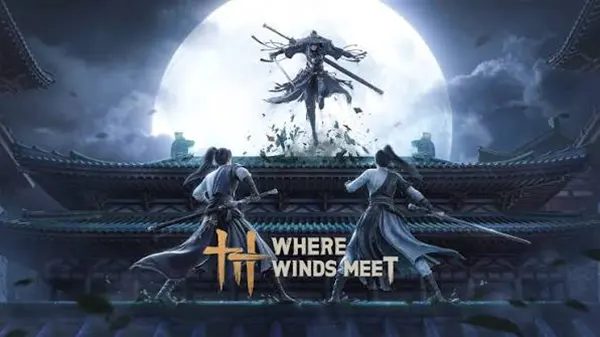
Where Winds Meet on iOS and Android in 2026: How Complete Is the Wuxia Open World on Mobile?
Where Winds Meet is an unusually ambitious game to carry in a pocket. Everstone Studio’s action RPG combines a large tenth-century Chinese setting, story-driven quests, martial arts combat, towns filled with NPCs, wilderness areas, underground locations, multiplayer activities and a long progression system that was originally presented with PC and console-scale production values in mind. The global mobile edition arrived for iOS and Android on 12 December 2025, and by September 2026 it has become a genuine way to play the same continuing game rather than a smaller spin-off made around short phone sessions. The important question is therefore no longer whether Where Winds Meet exists on mobile, but how much of its character survives the move to a touchscreen. In terms of quests, progression, regions and online connectivity, the answer is: remarkably close to the full experience. In terms of visual detail, heat management, frame-rate stability and the precision of demanding combat, there are still meaningful differences. Those distinctions matter because Where Winds Meet asks considerably more from a phone than a typical mobile RPG.
How Much of Where Winds Meet Is Really Available on Mobile?
The clearest point to establish is that iOS and Android players are not being given a separate shortened campaign. NetEase launched the mobile edition with the intention of carrying over the main game content available on PC and consoles, alongside full cross-play and cross-progression. That distinction has become even more important during 2026 because Where Winds Meet has continued to grow after release. By September the game had moved into Version 2.1, following the larger Version 2.0 expansion of its world and systems. Areas referenced by the developer during the 2026 content cycle include Qinghe, Kaifeng, Hexi, Liangzhou, Qinchuan, the Imperial Palace and Hidden Mountain. Mobile players participate in this continuing version rather than remaining on an old or isolated edition. New martial arts, quests, bosses, world activities and later additions therefore form part of the same ongoing game.
Cross-progression makes that shared structure practical rather than merely a feature written on a store page. Character data, general progress and purchases can follow the same linked account between mobile and the other supported devices. A player can therefore advance a character at home and then continue with that character on an iPhone or Android handset without maintaining a second mobile save. Account linking does require care. Anyone who already has a developed character elsewhere should link the existing account or sign in with the correct linked credentials before creating a new character on mobile. The developer warns that two accounts which already contain separate character data cannot simply be joined afterwards. It is a small administrative detail, but an important one for somebody installing the phone version after dozens of hours elsewhere.
This shared progression also changes the role a phone can play. Where Winds Meet does not force mobile users into a special set of abbreviated missions designed only for five-minute sessions. Story chapters, character development, combat preparation, world roaming and many recurring activities can be continued from the same save. The Google Play listing in 2026 describes the game as a free wuxia open-world action RPG with cross-play between mobile, PC, PS5 and Xbox, while the developer continues to publish updates for the common game. As a result, a phone can be a primary device for a player who is comfortable with touch controls, or a secondary device used to continue existing progress away from a larger screen. The content relationship between those two uses is much closer than it is in games that offer a separate mobile adaptation.
World, Story and Progression Without a Separate Mobile Campaign
The scale of the world is one of the strongest tests of this approach. Where Winds Meet is built around more than a chain of combat arenas. Its environments combine settlements, open countryside, ruins, caves and underground spaces with NPC encounters, side stories, environmental tasks and different forms of traversal. The martial arts system also extends well beyond standard sword attacks: the game includes multiple weapon styles and more than 30 Mystic Arts, with abilities based on wuxia ideas such as Tai Chi and Lion’s Roar. These systems are retained on mobile, which means the phone edition still has the unusual rhythm of travelling through the countryside, becoming distracted by a nearby event, entering a fight, speaking with characters and then returning to a longer quest. That sense of a connected world is essential to Where Winds Meet, and it has not been replaced by a menu of simplified mobile stages.
The same principle applies to the relationship between solo and online play. During 2026 the developers continued adjusting how activities and rewards move between modes, including synchronisation of certain world completion progress. Multiplayer remains integrated with the wider game rather than sitting in a separate mobile-only section. Cross-play means a phone user can take part in online activity with people playing on other supported devices, subject to the game’s server-region rules. This does not make every situation equally convenient on a small screen, but it does remove a major content barrier. A mobile player is not looking at a reduced social population or waiting for a special phone edition to receive important areas months later.
There is, however, a difference between transferring the complete structure of a game and reproducing every part of its presentation identically. Mobile hardware has tighter limits on graphics processing, memory, power consumption and sustained cooling. NetEase acknowledged this from the beginning. Some real-time cutscenes could be replaced by video playback on mobile when rendering them live would place too much strain on particular devices, and graphical settings are adjusted according to hardware capability. This means that the narrative event, quest and location can remain the same while the way a scene is drawn changes. For most players this is a far less serious compromise than cutting missions or regions, but it explains the most accurate description of Where Winds Meet mobile in 2026: the game itself transfers very extensively, while its visual presentation is adapted.
What Changes When a Large Wuxia RPG Moves to a Smartphone?
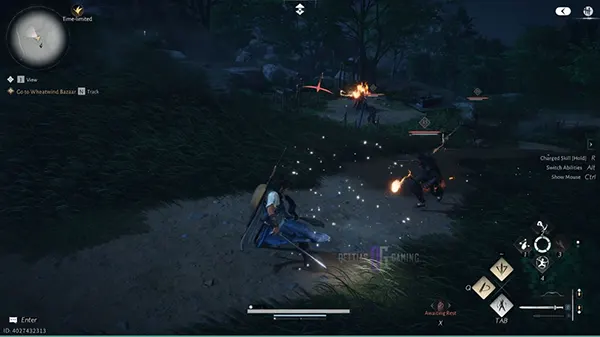
The greatest difference is not the amount of content but the way the player controls it. Where Winds Meet has combat built around timing, movement, target selection, defensive reactions, weapon techniques and Mystic Arts. On a PC or console, these actions have dedicated physical inputs. A touchscreen has to place movement, attacks, defensive actions, skills and contextual commands in the same area where the player is also trying to watch an enemy. Fast encounters therefore demand more finger movement and create a greater chance of covering part of the screen at the wrong moment. Casual fights translate quite naturally after some practice, but difficult bosses and competitive encounters make the difference in input precision much easier to feel.
The mobile controls have changed considerably since launch. The interface allows the position of important controls to be adjusted, and NetEase has continued adding options during 2026 rather than treating the original layout as finished. A May update expanded the custom layout with duplicate buttons for actions such as Jump, Dodge, Bow and Lock-on, which is useful for players who want the same command accessible from more than one thumb position. The update also added more control over the cancel button and refined the way dual-weapon skills switch on touchscreens. These are small changes individually, but together they matter in a game where the default interface has to accommodate far more commands than the average phone action game.
Camera behaviour has received similar attention. Mobile players can enable an option that turns the camera towards a selected target when certain skills are used without a locked enemy, reducing the amount of simultaneous thumb movement required during combat. NetEase has also worked on the visual feedback shown when switching weapon panels and on the responsiveness of skill-panel changes during fights. The result is not an attempt to pretend that glass controls are identical to a physical controller. Instead, the mobile edition increasingly automates or reorganises actions that are awkward to perform at the same time on a touchscreen. That approach generally works well for ordinary story combat, although players who rely heavily on exact manual camera placement may need more time to find a comfortable arrangement.
Touch Combat and Interface Use After Months of Mobile Updates
Where Winds Meet also uses assistance to reduce the initial gap between physical controls and touch input. Assist Deflection was enabled by default for newly created mobile characters when the edition launched, although it can be changed in the settings. That choice makes sense because deflection is one of the mechanics where a fraction of a second and a misplaced thumb can change the result of an encounter. Mobile difficulty settings were likewise introduced with a gentler starting approach for new characters. These decisions do not remove the combat system; the player still needs to understand attacks, defence, positioning, skills and weapon behaviour. They simply acknowledge that learning those systems while also learning a crowded touchscreen layout is different from using a controller or keyboard.
Outside combat, the large interface is a mixed experience. Maps, quest information, character development screens, inventory management and the many secondary systems of Where Winds Meet contain a lot of information. A modern large-screen phone can display them clearly, but a smaller handset inevitably feels busier than a monitor or television. The developer has been gradually adapting these areas as well. Mobile updates during 2026 addressed touch targets, skill panels, invitation buttons and construction controls, while Build Mode gained additional touchscreen camera behaviour such as two-finger zoom. This steady work is important because a faithful mobile conversion is not only about getting a 3D world to render. A player can spend a significant part of a long session reading menus, comparing equipment or adjusting a character, and those ordinary interactions have to remain usable.
In practical use, this creates an interesting division. Straightforward quests, travelling, character management, routine world activities and many standard fights fit a phone very well once the layout is familiar. Content that asks for repeated precise reactions can be more comfortable with physical controls and a larger display. Cross-progression makes that difference less restrictive because the player does not have to choose one device permanently. Someone can handle shorter sessions and routine progress on mobile, then continue the same character elsewhere for a difficult encounter. Equally, a confident touch player can simply remain on mobile. The phone edition is not designed only as a remote companion for another version; it is capable of supporting the full progression loop on its own.
Graphics, Performance and the Real Cost of Carrying the Open World
Visual quality is where the word “same” needs the most qualification. Where Winds Meet can look exceptionally detailed, with dense vegetation, elaborate clothing, reflections, shadows, architecture and long outdoor views. A phone has to render those scenes within a much smaller power and thermal budget. The mobile edition therefore changes quality according to settings and hardware rather than reproducing the highest PC presentation without compromise. NetEase has continued to narrow the gap. A May 2026 update introduced an HD Appearance resource option for some higher-performance mobile devices, allowing compatible phones to load higher-fidelity character models comparable with the PC assets in specified areas such as Scenario, Photo Mode and Appearance Mode. The wording is important: this is an improvement to particular visual assets, not evidence that every mobile scene is now identical to the maximum PC settings.
Performance also varies much more between phones than the presence of an App Store or Google Play install button might suggest. In its July 2026 developer discussion, the team specifically said that mobile optimisation work was continuing around overheating, frame drops and menu stuttering across different devices. That acknowledgement is useful because it sets realistic expectations. A demanding open-world game may run smoothly at the start of a session and then become less consistent after the handset heats up. Higher graphical settings can make scenery and character detail more attractive while increasing the sustained load. For long sessions, a stable setting that leaves some thermal headroom can therefore produce a better experience than simply selecting the highest available option.
Updates throughout 2026 show that optimisation is still an active process rather than a completed launch task. The developers have reduced the memory footprint of animation resources, worked on distant shadows, improved rendering in bamboo and waterfall scenes, addressed stuttering in several activities and continued fixing visual or animation problems. Version 2.1 remained the current major branch in early September 2026, with additional fixes published on 7 September. None of this means every Android phone or iPhone will behave identically. It means the mobile edition is receiving ongoing engineering work alongside new content. For a game of this size, that distinction is more useful than a simple claim that it either “runs well” or “runs badly”, because results depend heavily on the handset and the settings used.
What iPhone and Android Players Should Expect in 2026
On Apple devices, the App Store listing requires iOS 15.0 or later, with the same minimum operating-system generation stated for supported iPhones and iPads. The store download is listed at roughly 3.5–4 GB depending on the regional listing, but that figure should not be treated as the final storage requirement for an active installation. Where Winds Meet downloads game resources after installation and now also offers optional high-definition resources for compatible devices. Android availability is similarly dependent on the individual handset shown in Google Play rather than one useful specification that describes every Android model. The sensible approach is to leave substantial free storage beyond the initial store package and use a reliable Wi-Fi connection when downloading the main resource files.
A powerful recent phone gives the mobile edition its best chance to show what the conversion can do, but raw performance is only part of the experience. Screen size, sustained cooling, battery condition and the player’s preferred control style all matter during an hour-long session. If the device becomes hot or the frame rate starts to vary, reducing visual settings is usually a more practical choice than preserving maximum detail. Players moving an existing character should also deal with account linking before creating anything new on the phone. Those simple preparations — enough free storage, sensible graphics settings, a stable connection and correct account linking — prevent several of the most avoidable problems without requiring the player to understand technical hardware terminology.
So how fully does a smartphone carry the large wuxia open world in 2026? In content terms, very fully. Mobile users receive the continuing Where Winds Meet world, character progression, major updates and cross-play rather than a cut-down campaign built around a different progression model. The compromises become clearer in presentation and interaction: high-end visual detail is scaled to the device, performance can change as a phone heats up, and difficult combat remains easier to control precisely with physical inputs. Yet those compromises no longer make the iOS and Android edition feel like an accessory to the “real” game. On capable hardware it is a substantial version of Where Winds Meet in its own right, and cross-progression makes it especially useful for anyone who wants the same character and the same expanding wuxia world available both at home and away.