
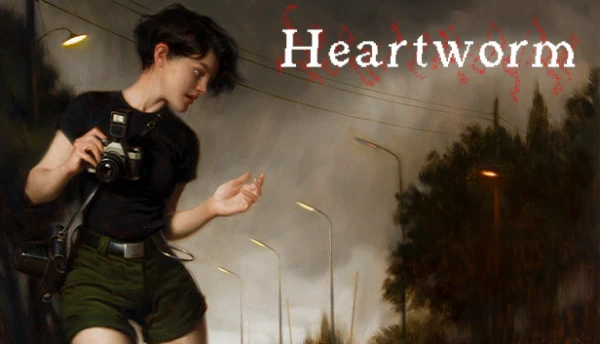
Heartworm: How a Camera Replaces Guns in PS1-Inspired Survival Horror
What happens when a survival horror game takes away the familiar handgun and gives its protagonist an ordinary camera instead? Heartworm builds its unsettling adventure around precisely that idea, replacing conventional weapons with photography while borrowing the visual language of classic PlayStation 1 games. Developed by Vincent Adinolfi and published by DreadXP, the game combines fixed camera angles, deliberately low-resolution graphics, mysterious locations and old-fashioned puzzles with a deeply personal story about grief. Players follow Sam, a young woman searching for a way to contact her deceased grandfather, only to become trapped in places where memories and supernatural threats appear inseparable. Her camera provides protection against hostile creatures, briefly illuminates dark surroundings and reinforces the game’s central themes of loss and remembrance. Originally released for PC in July 2025, Heartworm reached PlayStation, Xbox and Nintendo consoles in October 2026. Its unusual approach to combat makes it an interesting example of how familiar survival horror ideas can be rearranged without abandoning the genre’s defining characteristics.
Heartworm’s Story: A Journey Through Grief and Unsettling Memories
Heartworm begins with a relatively simple motivation: Sam cannot accept the death of her beloved grandfather and desperately wants another opportunity to speak with him. Her search for answers leads her towards obscure internet discussions about supernatural experiences and possible contact with the dead. Eventually, she encounters references to a mysterious house hidden in the mountains, supposedly connected to the afterlife. The rumours surrounding this building are hardly reassuring, particularly because those who have previously investigated it are said never to have returned. Nevertheless, Sam decides to travel there, hoping that the stories contain at least some truth. The setting reflects the game’s late-1990s influences, when anonymous message boards, analogue photographs and videotapes could make an unexplained event seem more mysterious. Rather than introducing a professional investigator or an experienced fighter, Heartworm places an emotionally vulnerable woman in circumstances she barely understands. Her actions are driven by a recognisable human desire to recover something that has been permanently lost, giving the supernatural events a personal significance from the beginning.
The house is only the starting point of Sam’s increasingly strange journey. Beyond its familiar rooms, the environment begins to follow a dreamlike logic, connecting locations that would make little geographical sense in the real world. Players encounter deserted residential streets, woodland paths, threatening buildings and other spaces that seem connected to fragments of Sam’s past. The Archive, an unusual central location, helps link different parts of this world, while the individual areas gradually reveal more about the protagonist’s experiences. Some places contain recognisable domestic details, including furniture and personal belongings, whereas others feel deliberately artificial or disconnected from reality. This contrast matters because the game rarely relies on constant attacks to sustain tension. An ordinary suburban house can become disturbing when its rooms contain familiar objects arranged in unfamiliar circumstances. Equally, a quiet woodland setting can feel dangerous long before an enemy appears. The changing locations also prevent the story from remaining confined to a single haunted building, giving the player different environments to investigate while maintaining the underlying sense that something is deeply wrong.
Much of the storytelling takes place outside conventional dialogue. Notes, environmental details, recorded material and Sam’s reactions to particular locations gradually provide context for her journey. Her memories influence how the surroundings are presented, encouraging players to pay attention to seemingly ordinary objects rather than treating every room as another obstacle between encounters. The narrative also raises questions about the reliability of memory and the ways people interpret painful experiences after losing somebody close to them. This gives Heartworm a different emotional focus from horror games built primarily around escaping monsters or uncovering a criminal conspiracy. Its themes are not always explained directly, and some events remain open to interpretation until later in the adventure. The developers estimate that an ordinary playthrough takes approximately four to six hours, which allows the story to develop without requiring dozens of hours of exploration. Multiple endings provide additional reasons to return, although the overall experience remains a relatively compact, single-player psychological horror story rather than a lengthy role-playing adventure.
How PlayStation 1 Visuals Shape Heartworm’s Atmosphere
The influence of the original PlayStation is immediately apparent in Heartworm’s visual design. Character models have angular outlines, environmental textures deliberately retain a rough appearance, and many locations use subdued colours that recall early three-dimensional horror games. These choices are not simply the result of limited production resources. They are part of an intentional artistic direction that makes ordinary objects appear slightly unnatural. A figure standing at the far end of a corridor can look especially threatening when its features are difficult to distinguish, while a distant shape among trees may be difficult to identify until Sam approaches it. The developers also provide optional pixelation and retro visual effects, allowing players to adjust how strongly the game resembles the first generation of 3D console releases. Importantly, Heartworm is a modern game inspired by that period, not an original PlayStation title or an emulated release. Its presentation combines nostalgic visual limitations with contemporary development techniques, retaining much of the older aesthetic without requiring players to use original hardware.
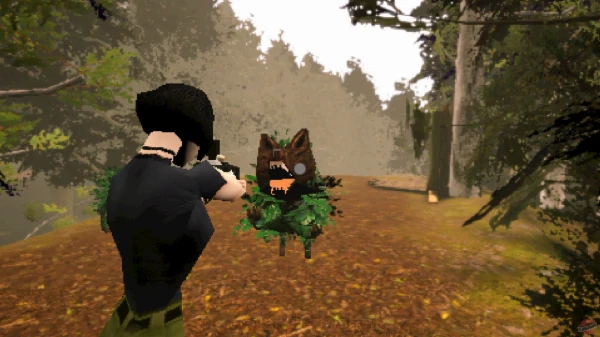
Fixed camera angles are another important connection with classic survival horror. In many rooms, players see Sam from a predetermined viewpoint rather than controlling the viewing angle freely. This approach closely resembles the original Resident Evil games, where the position of the camera determined which parts of a corridor or room could be seen. An approaching enemy might remain outside the visible area, creating uncertainty even when the surroundings seem quiet. Heartworm uses similar framing to guide attention towards important environmental details or conceal potential threats. However, the game also recognises that some aspects of 1990s control systems can be frustrating for modern audiences. Players can choose traditional tank controls, where turning and moving forwards are separate actions, or use a more familiar modern movement scheme. When Sam raises her photographic camera to confront an enemy, the viewpoint changes to a closer, over-the-shoulder aiming perspective. This combination preserves the cinematic atmosphere of fixed views while providing more direct control during dangerous encounters.
Sound and presentation reinforce the retro influences without relying entirely on visual imitation. Heartworm features an original soundtrack, unsettling ambient sounds and a mixture of pre-rendered and in-game cinematic sequences. Television interference, unusual noises and sudden changes in the surrounding atmosphere contribute to the impression that the environment itself cannot be trusted. The game takes considerable inspiration from Silent Hill and Resident Evil, but its treatment of supernatural imagery also reflects the importance of photographs and recorded media in the story. In a 2025 interview, Vincent Adinolfi discussed how physical recordings can preserve memories and why cameras, tapes and similar objects suited the period he wanted to recreate. He also explained that deliberately arranged viewing angles help direct attention in much the same way as cinematography. These creative decisions give the retro presentation a narrative purpose. Heartworm is not especially dependent on graphic violence, instead drawing much of its unease from distorted familiarity, unnatural creatures and the uncomfortable relationship between Sam’s memories and the places surrounding her.
How a Photographic Camera Replaces Conventional Weapons in Heartworm
The most recognisable feature of Heartworm is its decision to make a photographic camera Sam’s primary means of defence. Instead of collecting pistols, shotguns or other conventional weapons, players use the camera to confront supernatural enemies. Raising it changes the perspective to a closer aiming view, allowing Sam to target a hostile creature and take a photograph. Successfully photographing an enemy can damage or briefly interrupt it, with several exposures sometimes required to eliminate a threat. This mechanic becomes particularly striking when confronting the game’s distorted figures, including enemies whose appearances resemble television static. Such creatures fit naturally into a world where photographs, recordings and visual interference carry meaning beyond their practical uses. The camera does not function like an ordinary documentary tool that merely records what happens around Sam. It actively protects her, turning the simple act of taking a picture into an offensive action. According to Adinolfi, early versions of Heartworm included firearms, but he eventually moved away from them because they did not suit the story he wanted to tell.
Although the weapon is unusual, the underlying survival mechanics remain familiar. Offensive photographs consume film, making ammunition management an important part of the experience. Players cannot assume that every hostile creature should be confronted immediately, particularly when several enemies occupy the same area or when an encounter requires numerous photographs. Film can be collected while searching through locations, but carrying supplies does not automatically make every fight worthwhile. Some creatures are better avoided, while certain threats cannot be eliminated through ordinary camera attacks. These differences encourage a practical approach to survival: assess the situation, consider whether a confrontation is necessary and preserve resources for moments when escape is more difficult. Health recovery items also need to be managed, especially when several encounters occur between safe areas. This makes the camera comparable to a conventional survival horror weapon in terms of resource planning, even though its appearance and narrative significance are completely different. Running past an enemy can sometimes be a better decision than spending valuable film to remove it.
The idea of fighting supernatural creatures through photography naturally invites comparisons with Fatal Frame, also known as Project Zero, which introduced its famous Camera Obscura on PlayStation 2. However, Heartworm uses a considerably simpler combat system. It does not attempt to reproduce the extensive photographic equipment mechanics, lens abilities and specialised film arrangements associated with that series. Instead, most encounters revolve around aiming, taking photographs, creating distance and deciding whether continued fighting is worthwhile. This relative simplicity is consistent with Heartworm’s emphasis on atmosphere and exploration, although it also limits how much the combat evolves throughout the adventure. The significance of the camera therefore extends beyond its immediate effectiveness against monsters. Sam is searching for traces of somebody she has lost, and her only defensive instrument is an object traditionally used to preserve moments that cannot be repeated. Every photograph brings together two contrasting ideas: attempting to protect herself from the present and holding on to something from the past. That relationship makes the camera an appropriate choice for this particular story rather than merely an unusual replacement for a gun.
Film, Camera Flash and the Importance of Choosing When to Fight
Heartworm gives the camera more than one function, and understanding the distinction is useful from the opening stages. Taking offensive photographs consumes film, but Sam can also activate the camera’s flash to illuminate dark surroundings without spending that ammunition. The light lasts only briefly, creating a momentary view of an otherwise poorly lit space. This is particularly effective in dark interiors, where a flash may reveal the layout of a room before the shadows return. It also changes the relationship between the player and the environment. A conventional torch provides continuous visibility, whereas a photographic flash offers only a short opportunity to examine what lies ahead. The player must remember what was visible and decide how to proceed without constant illumination. However, the flash is primarily a visibility aid rather than a universal method of defeating enemies or solving every puzzle. Its importance varies between locations, and some later areas make comparatively little use of it. Nevertheless, the distinction between film-consuming attacks and free illumination is one of the clearest ways Heartworm gives ordinary photographic equipment a practical survival purpose.
The camera can also be improved through a limited number of modifications. One notable example is the Burst Mod, an optional accessory obtained by completing a chess-related puzzle in Sam’s old bedroom. Once attached to the camera, it allows three photographs to be taken in a rapid burst, making it easier to inflict damage quickly during dangerous encounters. This reward illustrates the connection between exploration and combat: investigating a room and solving an optional challenge can provide something useful later rather than simply progressing the story. The equipment system is relatively restrained, however, and players should not expect an extensive collection of interchangeable cameras or a long sequence of weapon upgrades. Basic positioning remains more important than complicated equipment management. Creating enough distance to aim properly, avoiding unnecessary risks and keeping track of available film are generally more valuable than treating the camera as a device for continuous attacks. When confronted by several enemies, it is often sensible to identify an escape route before committing to a fight. The camera provides a means of defence, but it does not remove the need for caution.
The simplicity of photographic combat has both advantages and limitations. It keeps attention on the atmosphere, puzzles and story, preventing regular encounters from becoming lengthy action sequences. The unusual visual effect of photographing distorted creatures also helps distinguish Heartworm from horror games built around conventional firearms. At the same time, the basic pattern of raising the camera and taking repeated shots can become predictable, particularly once players understand how common enemies move and react. Several published reviews have noted that enemy behaviour, camera modifications and some boss encounters offer less variety than the central idea initially suggests. The flash mechanic also has greater potential than the finished game consistently uses, especially in environments where temporary illumination could have supported more elaborate situations. These limitations are worth recognising because the presence of an unconventional weapon does not automatically produce unusually deep combat. Heartworm’s camera works most convincingly as part of a wider horror experience, where limited resources, uncertain visibility and the fear of encountering something unfamiliar matter more than mastering a complicated fighting system.
Exploration, Puzzles and the Survival Horror Experience
Despite its distinctive camera mechanics, much of Heartworm follows the exploratory structure established by classic survival horror. Players move through interconnected areas, examine suspicious objects, collect important items and search for ways to access previously inaccessible rooms. The opening abandoned house introduces the basic rhythm of investigation, while later sections expand into a neighbourhood, wilderness and a clock tower environment. Each area has its own atmosphere and arrangement of obstacles, with the setting changing significantly as Sam progresses. Locked doors and unusual mechanisms often prevent immediate access to the next location, requiring players to revisit earlier rooms after obtaining additional information. This style of progression rewards awareness of the surroundings rather than quick reactions alone. A location that initially seems unimportant may contain a clue needed much later, while a familiar hallway can become threatening after the appearance of a new enemy. The result is an adventure built around gradually understanding the environment, rather than simply following a direct route from one encounter to another.
Puzzles are central to that process and generally depend on observation, reading and recognising connections between objects. The opening house contains a grandfather clock puzzle that requires information found elsewhere in the building, establishing the importance of examining notes carefully. Later challenges involve combinations of symbols, special objects, unusual mechanisms and arrangements of items that must be understood before a new passage becomes available. The optional chess puzzle that rewards players with the Burst Mod provides another example of how seemingly unrelated activities can have practical consequences. Most challenges are designed around information available within the surrounding area, although they sometimes require returning to earlier rooms or reconsidering details that initially appeared decorative. Heartworm rarely demands specialist knowledge or advanced mathematical reasoning, making its puzzles relatively approachable for players who are willing to pay attention. There are still opportunities to become temporarily stuck, particularly when an important clue has been overlooked or an item has not been examined closely. Rather than immediately searching for a complete walkthrough, checking collected notes and revisiting nearby rooms is often enough to establish the next objective.
The game also includes familiar resource-management features, including an inventory with limited space, safe rooms, storage facilities and healing supplies. These elements encourage players to plan how they move through dangerous locations. Returning to a safe room allows Sam to save progress and organise items before another journey into hostile territory, while storage helps prevent the inventory from becoming unnecessarily crowded. Carrying sufficient film and healing supplies is useful, but keeping space available for important objects can be equally significant. Players who search thoroughly may also encounter optional rewards and hidden details that are not essential to completing the main story. One particularly unusual activity involves photographing ten hidden possums scattered through the game, adding a lighter collectible objective to an otherwise sombre adventure. Beyond these extras, the most useful general strategy is to develop a habit of examining rooms carefully, reading documents, checking the map and saving after meaningful progress. Heartworm rewards methodical investigation, and unnecessary combat can make that investigation more difficult by consuming supplies that might be needed later.
Where to Play Heartworm in 2026 and What to Expect
Heartworm is available on several gaming systems as of October 2026. Its original PC version launched through Steam on 31 July 2025, with the release developed by Vincent Adinolfi and published by DreadXP. On 1 October 2026, the game expanded to PlayStation 4, PlayStation 5, Xbox One, Xbox Series X|S, Nintendo Switch and Nintendo Switch 2. These console editions make the experience accessible to a wider audience, including players who prefer using a television or a handheld Nintendo system rather than a desktop computer. Heartworm is not a native smartphone game, and its confirmed release list does not include official Android or iOS editions. This distinction is worth noting because its compact length and retro appearance might otherwise suggest a mobile release. The console versions retain the central combination of photographic combat, exploration, puzzle-solving and psychological horror. Since the game is designed as a single-player adventure, it does not depend on online multiplayer sessions or competitive progression to provide its main experience.
Players should expect a focused adventure rather than a particularly long horror campaign. The official description estimates approximately four to six hours for a normal playthrough, although time spent investigating optional areas, solving puzzles and pursuing different endings can increase the total. Multiple endings provide some replay value, but the main attraction remains the atmosphere and the gradual reconstruction of Sam’s story. The choice between traditional tank controls and a modern movement scheme is especially helpful for people approaching this style of horror for the first time. Those who remember the original PlayStation era can retain much of the familiar control style, while newcomers can choose more comfortable movement without abandoning the fixed-camera presentation. Optional pixelation and retro effects offer similar flexibility in the visual presentation. The PC release also has a downloadable demonstration listed on Steam, providing an opportunity to assess the movement, camera mechanics and overall atmosphere before purchasing the complete game. As with many independent horror titles, the best experience depends less on technical performance or elaborate character progression than on whether the player enjoys slower exploration and environmental storytelling.
Heartworm’s greatest distinction is the way it connects an everyday object with several aspects of survival horror. Photography provides protection against supernatural enemies, occasionally helps Sam navigate darkness and reflects a narrative concerned with memories that refuse to disappear. Its low-resolution visuals, fixed viewpoints and eerie environments recall the PlayStation 1 era, but modern aiming and optional controls make the experience more approachable than a strict recreation of a 1990s release. The game is not without weaknesses: photographic combat remains fairly straightforward, some encounters become repetitive, and players seeking elaborate puzzles or highly developed fighting mechanics may find the systems limited. Nevertheless, its combination of personal storytelling, unsettling locations and resource-conscious exploration gives the familiar survival horror formula a distinctive identity. Heartworm is particularly suited to people who appreciate Silent Hill, early Resident Evil and shorter psychological horror adventures, especially when atmosphere matters more than action. By replacing traditional firearms with a camera, it demonstrates that survival horror can create tension through what a character chooses to preserve, observe and confront, rather than through increasingly powerful weapons.